(Page 18)
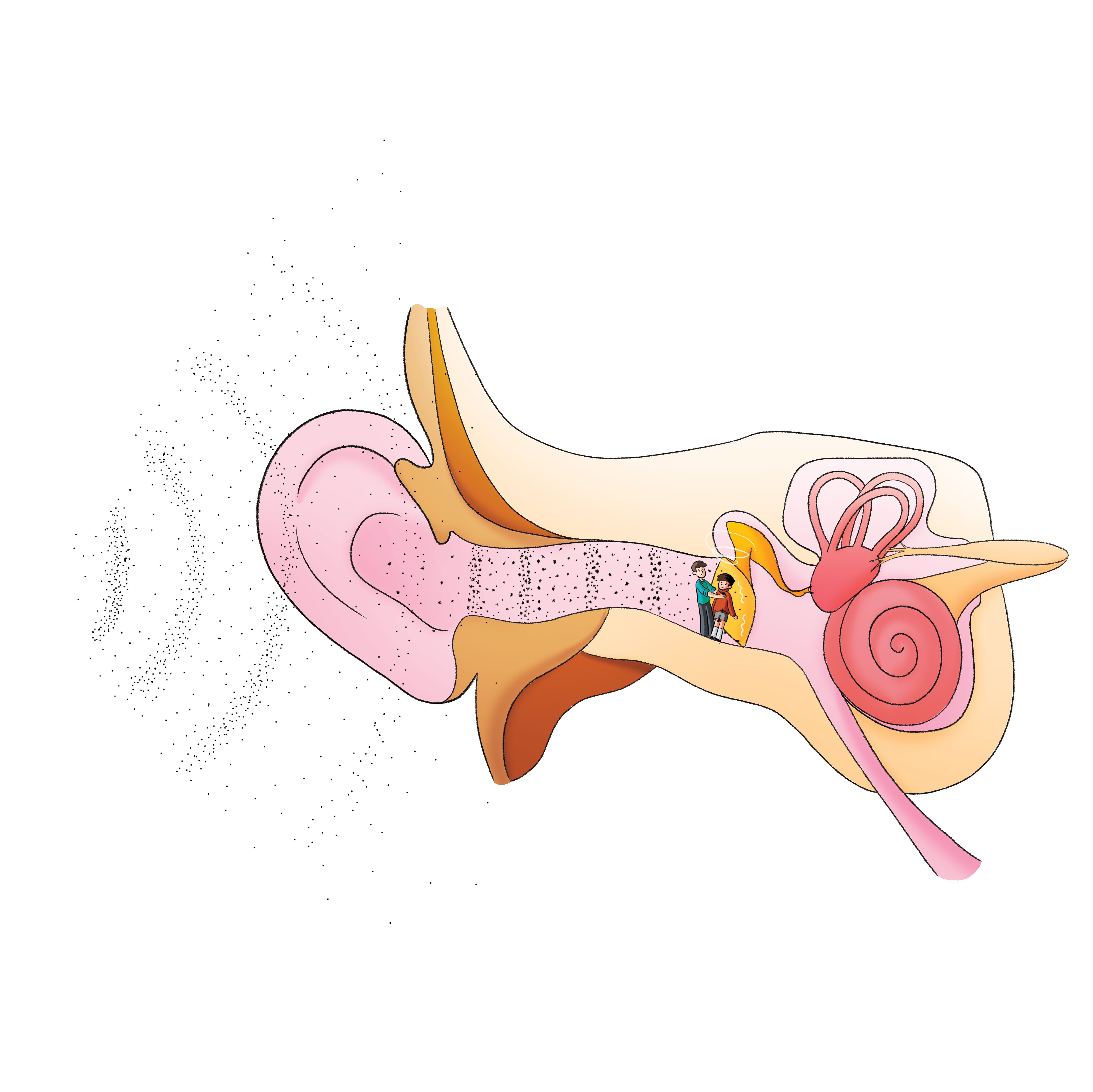
MEABO: The stapes is the smallest bone in your body. The eardrum is much wider than the end of the stapes. The force moving the eardrum gets transferred across to the stapes. This focuses the movement of the eardrum's wide area onto the small end of the stapes. This increases the pressure of the stapes vibrating into the cochlea.
BEAN: Got it. What happens after the stapes vibrates into the cochlea?
MEABO: Well, the cochlea is full of liquid.
BEAN: Liquid?!
MEABO: Yup. As the stapes vibrates backwards and forwards into the cochlea, it pushes the liquid. This produces waves in the liquid. These waves travel up the cochlea.
BEAN: Okay... can we go inside and have a look?
MEABO: Of course! Snorkels on. Let's go inside!
18
INSIDE THE COCHLEA (Page 19)
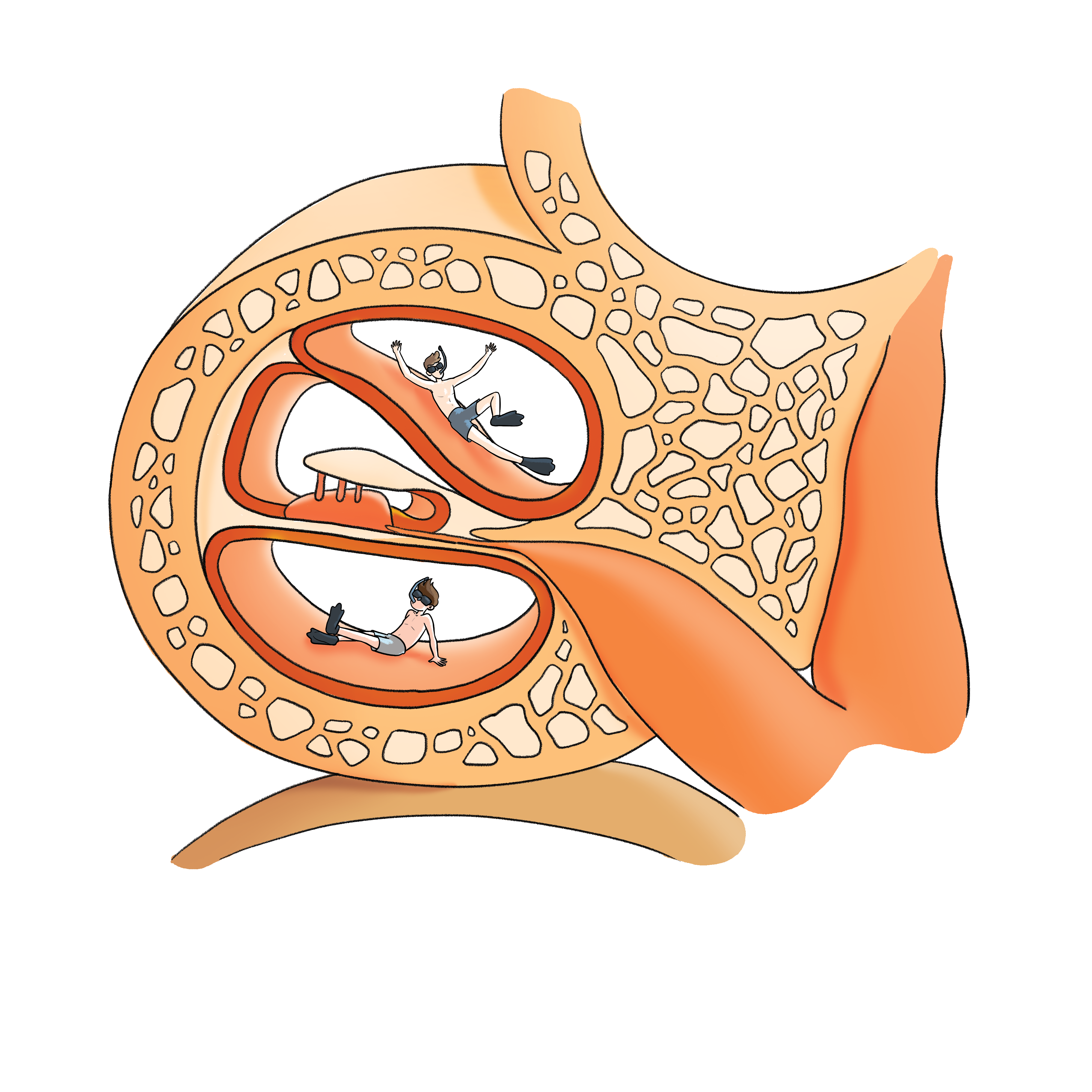
MEABO: As we can see, the cochlea is a spiral shape. It's divided into three sections that spiral round to its top. One for the wave to travel up the spiral, and one for the wave to travel down.
BEAN: And the one in the middle?
MEABO: This is the cochlea duct. As the waves travel up the spiral, they spread out. As they spread out, the waves travel through the floor, down to the cochlea duct.
BEAN: But why is the cochlea duct there?
MEABO: It's very important. As the waves travel through, they can make its floor vibrate up and down.
BEAN: And that's important because...?
MEABO: Along the cochlea duct's floor, all the way up the spiral, there are tiny hairs. When a part of the floor moves up, the hairs at that location get bent against a barrier above them.
19